St Cuthberts Mill Paper
Call or email:
+44 (0)1749 672015
sales@stcuthbertsmill.com
St Cuthberts Mill Paper
Watercolour
Printmaking
Digital Fine Art
|
|||
|




What Makes St Cuthberts Mill's Artist Paper so Consistent?
At St Cuthberts Mill, producing high-quality artist paper isn’t just about ingredients or machinery; it’s a meticulous craft, refined over centuries. Every sheet is the result of experience, precision, and care. From our printmaking paper Somerset® to our watercolour papers Saunders Waterford®, Bockingford® and Millford, our papers are recognised worldwide for their consistency, durability, and beautiful surface qualities. But what ensures that level of reliability, batch after batch?
Craftsmanship, testing and artist expectations
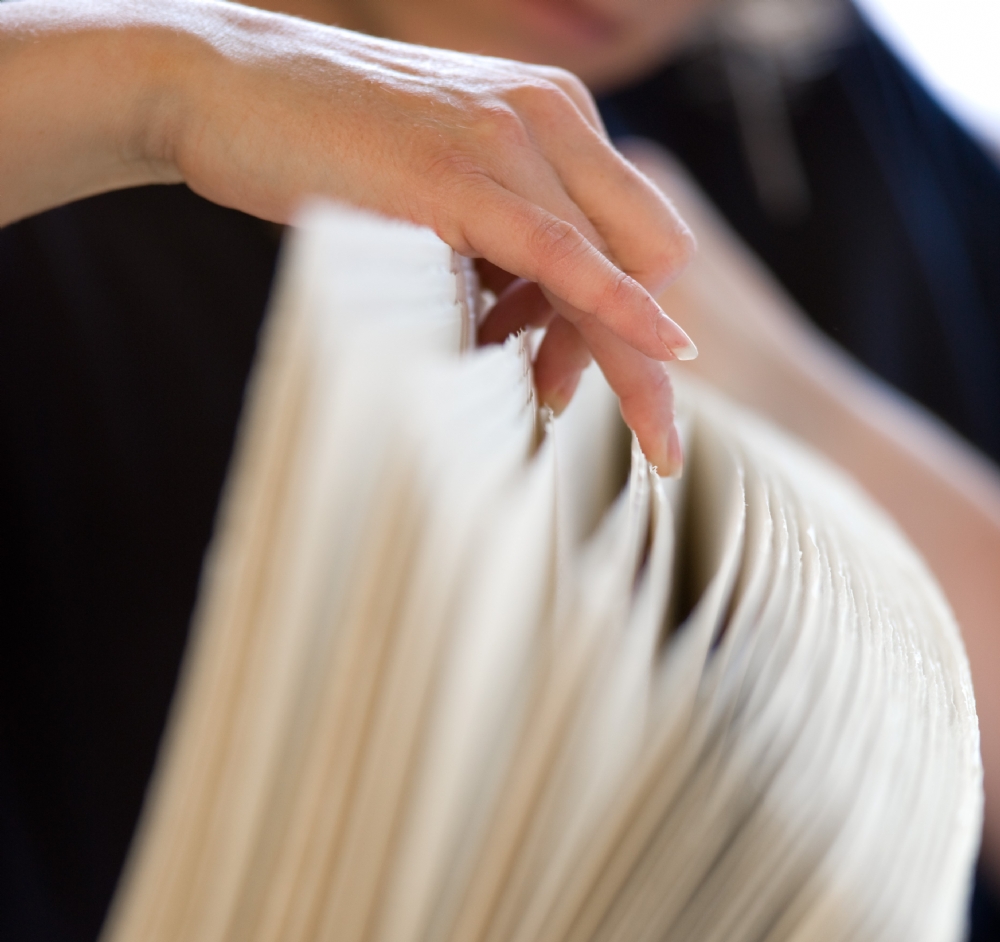
Creating paper that meets the standards of professional artists and printmakers demands more than traditional expertise; it requires constant, careful testing. At every stage of production, our papermakers evaluate the sheet to ensure it performs exactly as artists expect.
This process blends science and artistry. Our team uses precise measurements alongside a finely trained eye and touch, ensuring every sheet behaves consistently under the brush.
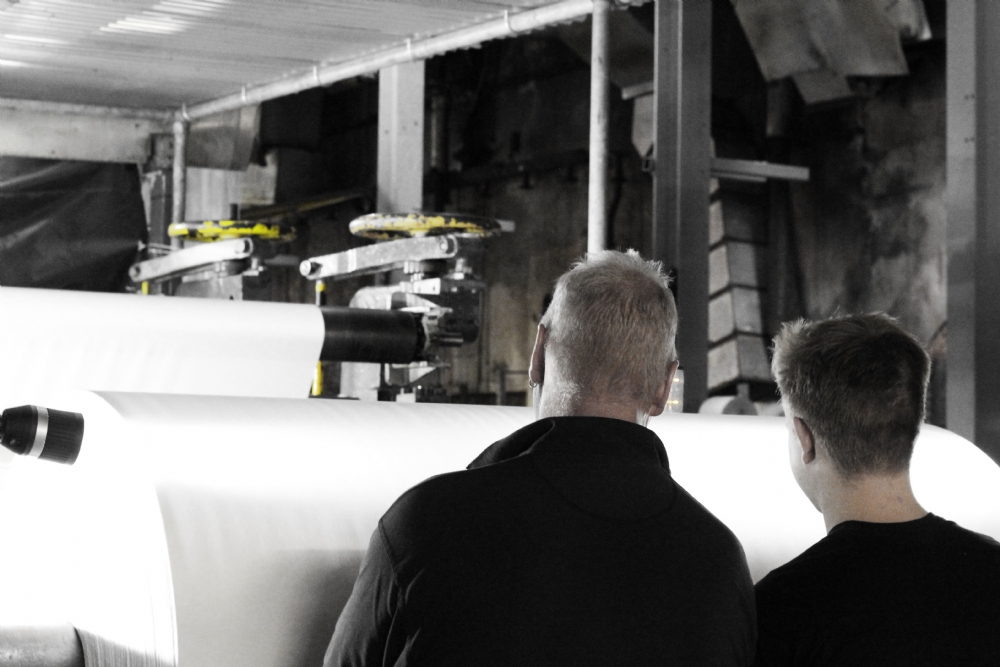
Real-time adjustments on a century old machine
While the paper is being made, our papermakers are continually testing and adjusting the settings on our century-old cylinder mould machine to achieve perfect quality. Every batch of paper is fully traceable; each pack, pad, or block leaving the mill carries a unique four-digit making number. This allows us to look up who made it, when, and how it performed during production.
Why structure and formation of the sheet matter to artists
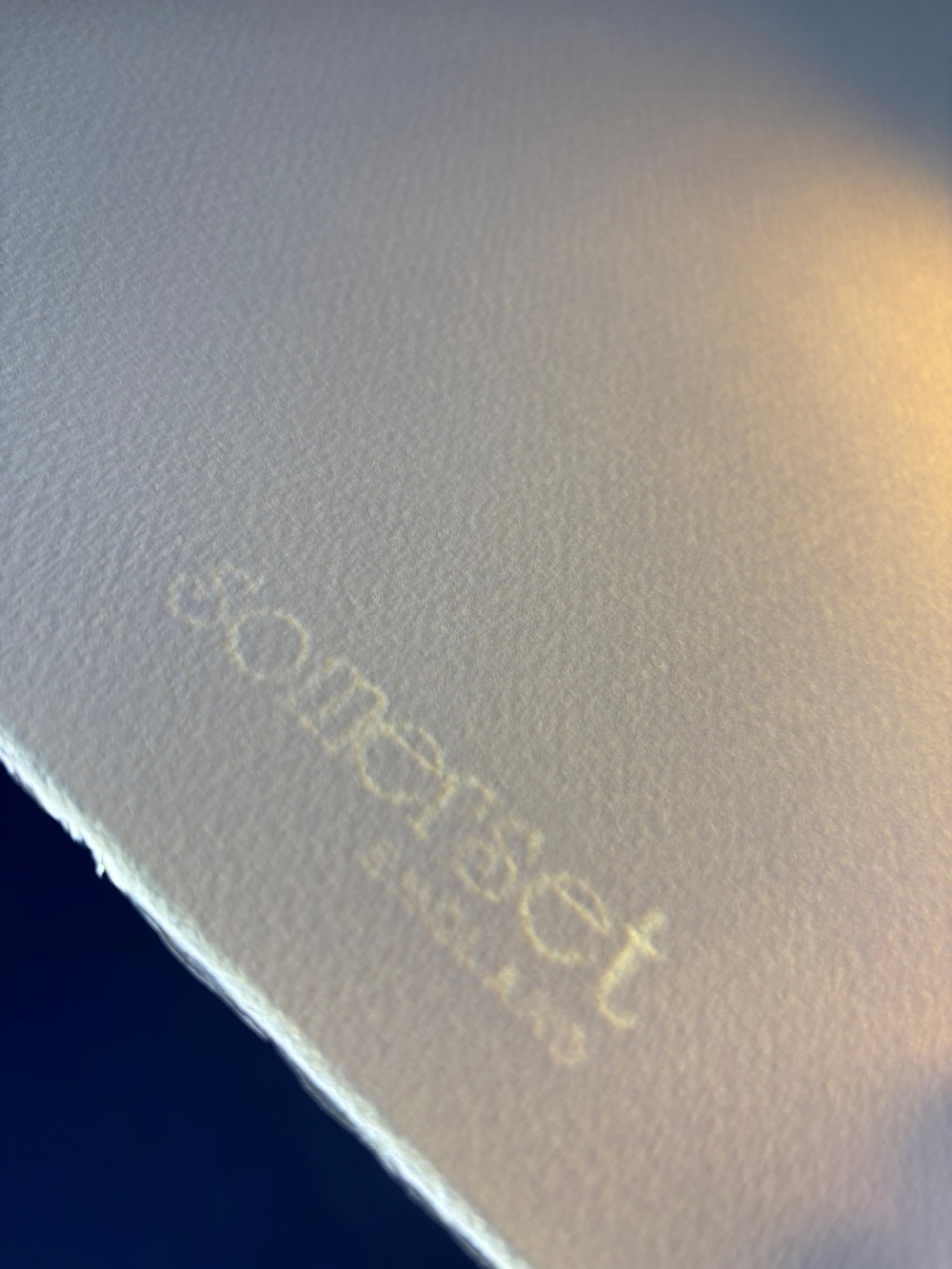
A good printmaking or watercolour paper begins with structure. We check the formation (the even distribution of fibres within the sheet - hold a piece of paper up to the light, and it will display its formation). A consistent fibre pattern ensures strength and stability, and provides a more even flat wash or even display of ink. We also measure air flow through the paper, confirming that the fibres were refined enough to bond properly during the papermaking process.
Detecting and correcting imperfections
Every sheet is examined for imperfections, such as dents from fibre clumps, surface lines, or even specks of dirt or the occasional insect (we are, after all, located beside a river!) Our papermakers work within tight tolerances, and with surface texture, they aim to match each batch to a ‘reference sheet’, considered the perfect example of a watercolour ‘Cold Pressed (CP/NOT)’, ‘Hot Pressed (HP)’ or ‘Rough’ surfaces, or the printmaking ‘Book’, ‘Satin’, ‘Velvet’ or ‘Textured’ all by a highly trained eye.
This precision must be balanced with the organic nature of papermaking: natural fibres, woollen felts that change with wear, and the subtle influence of changing seasons. Our team’s experience allows them to make delicate adjustments that preserve the mill’s trademark consistency, for artists to have trust in the behaviour of their sheet of paper.
Putting paint to the test
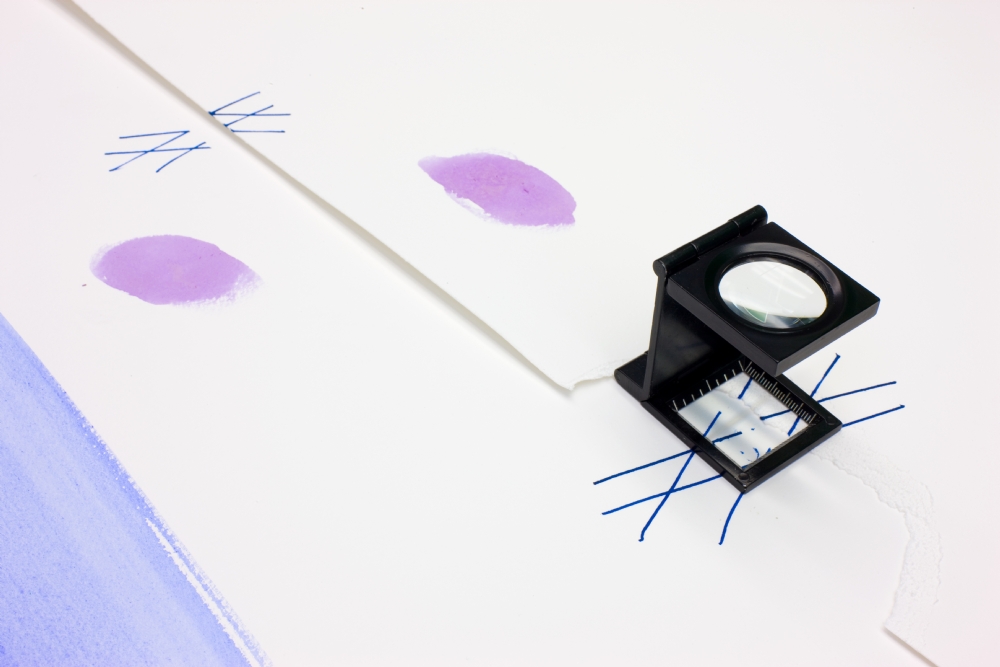
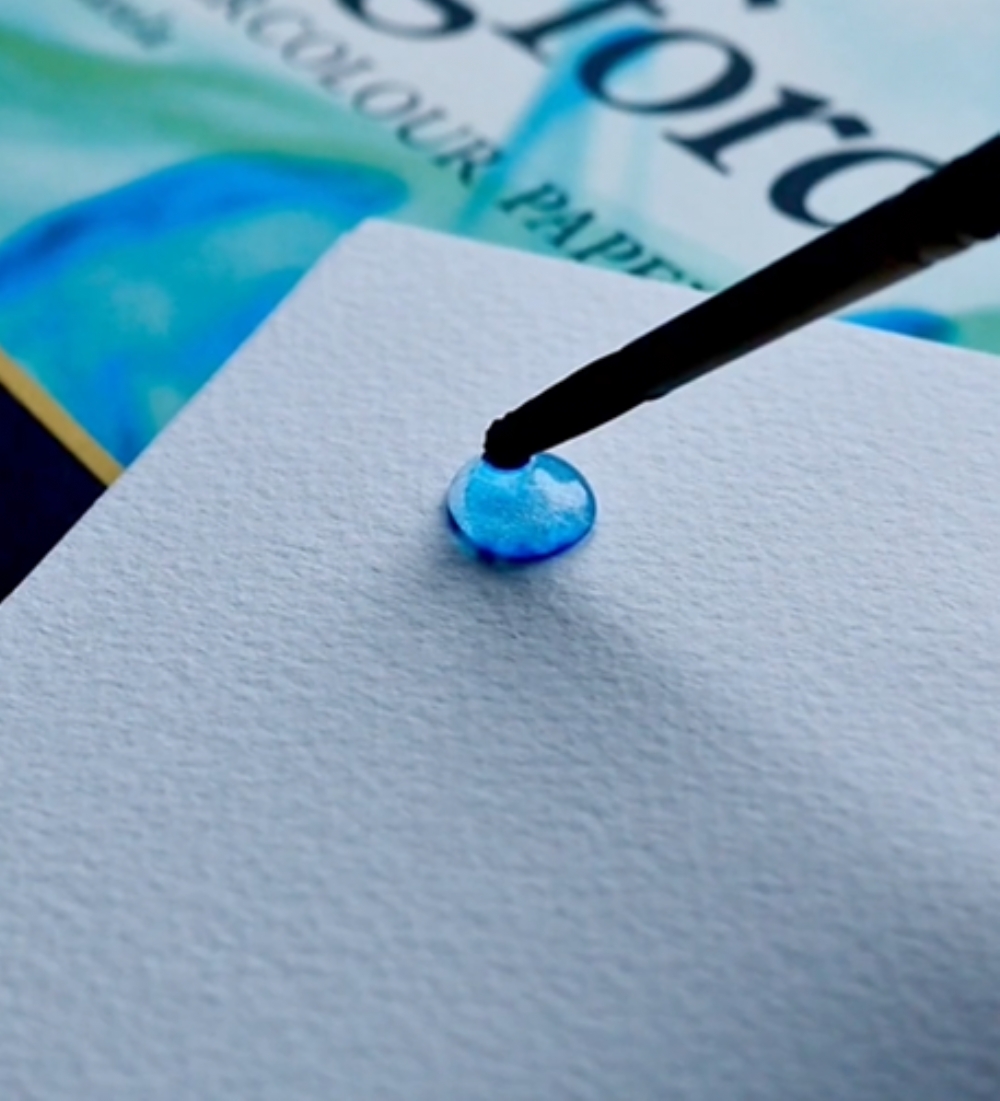
Because our papers are made for artists, much of our testing involves paint and ink. We use ultramarine blue watercolour, which easily highlights surface faults in large expanses of blue washes, and our own specially formulated brown hue, created with a blend of earth pigments, designed to deeply challenge the paper with demanding pigments.
Our papermakers lay flat washes, apply multiple glazes, and scrub the surface vigorously, often sacrificing a few brushes in the process, to ensure the sheet withstands demanding artist techniques. While they may not call themselves artists, their deep understanding of how paint and paper behave ensures the sheet performs perfectly behind an artist’s hand.
Perfecting absorbency and drying
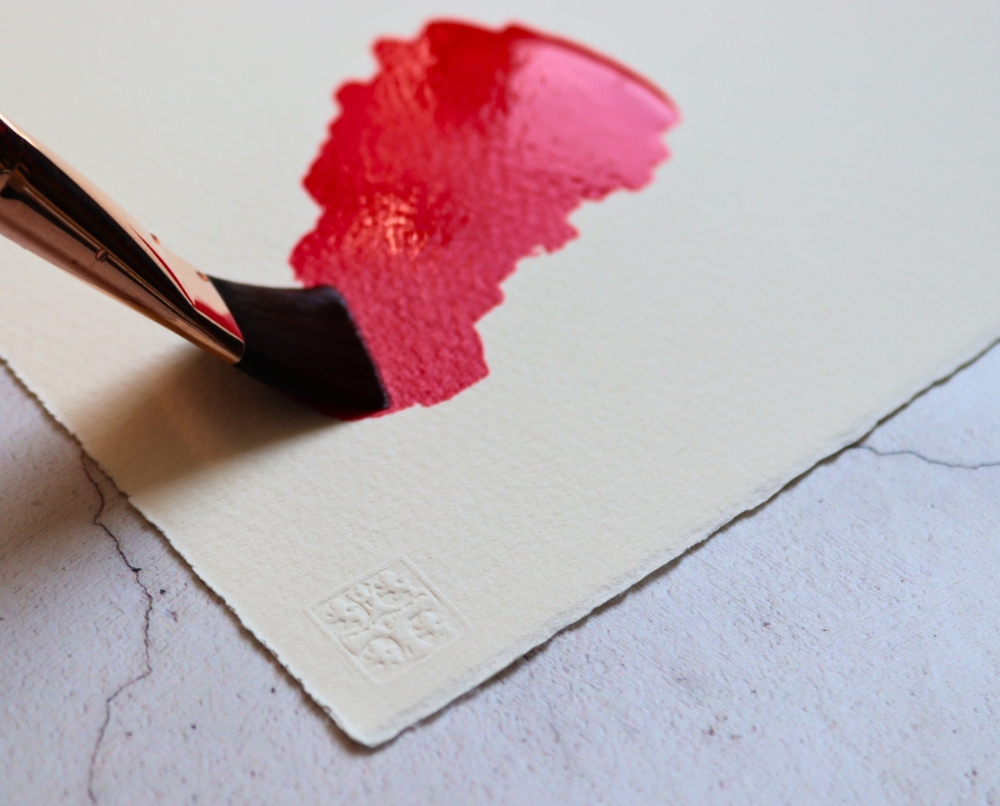
Absorbency is one of the defining features of great watercolour and printmaking paper. At St Cuthberts Mill, we design Saunders Waterford® and Bockingford® so that water initially resists the surface, allowing artists time to manipulate and blend pigments, before being evenly absorbed.
Millford, however, is crafted differently; it’s designed to remain in its wettest state for longer, ideal for artists who love extended wet-in-wet techniques. Across all our papers, even and predictable drying is key, giving artists confidence and control.
Somerset® is designed to be slightly absorbent, to penetrate and anchor the printmaking ink inside the paper’s fibres. This supports the transfer of ink and improves drying. Somerset® strikes a careful balance of absorbing enough ink to hold the ink beautifully, while remaining controlled enough to preserve clarity, tone and detail.
Why consistency matters
For printmakers and artists, consistency in paper is essential. Each sheet must behave predictably, from absorbency and texture to strength and formation, so artists can focus on creativity rather than adjusting for variations. Reliable paper ensures even washes, crisp lines, and faithful ink transfer, allowing techniques to perform as intended and results to match the artist’s vision. Whether layering glazes, building tones, or working across multiple editions, consistency gives artists confidence that every print or painting will achieve the desired effect.
A legacy of reliability
Consistency isn’t an accident; it’s built into every stage of our process. Each reel of paper undergoes more than 70 tests, from mechanical strength and absorbency to colour, shade, and texture. Every result is logged and reviewed, ensuring traceability and precision.
This level of care is what has made St Cuthberts Mill papers a trusted choice for generations of artists. It’s not just the materials or machinery that make them exceptional; it’s the experience, craftsmanship, and unwavering attention to detail behind every single sheet. For artists, this means confidence that every sheet will respond predictably, allowing full focus on the creative process rather than the material.