St Cuthberts Mill Paper
Call or email:
+44 (0)1749 672015
sales@stcuthbertsmill.com
St Cuthberts Mill Paper
Watercolour
Printmaking
Digital Fine Art
|
|||
|




Why Even Drying Matters in Watercolour Paper
Watercolour is often described as a conversation between water, pigment, and paper. Of these three elements, the paper is the quiet partner, but it is also the one that determines how everything else behaves. Among the many qualities that define a good watercolour paper, one of the most important is how it dries.
A high-quality sheet should dry evenly, allowing moisture to leave the surface at a consistent rate across the entire page. It is this even drying that underpins control, subtlety, and confidence in watercolour painting.
Without it, even the most carefully applied wash can become unpredictable.
The nature of an even drying sheet
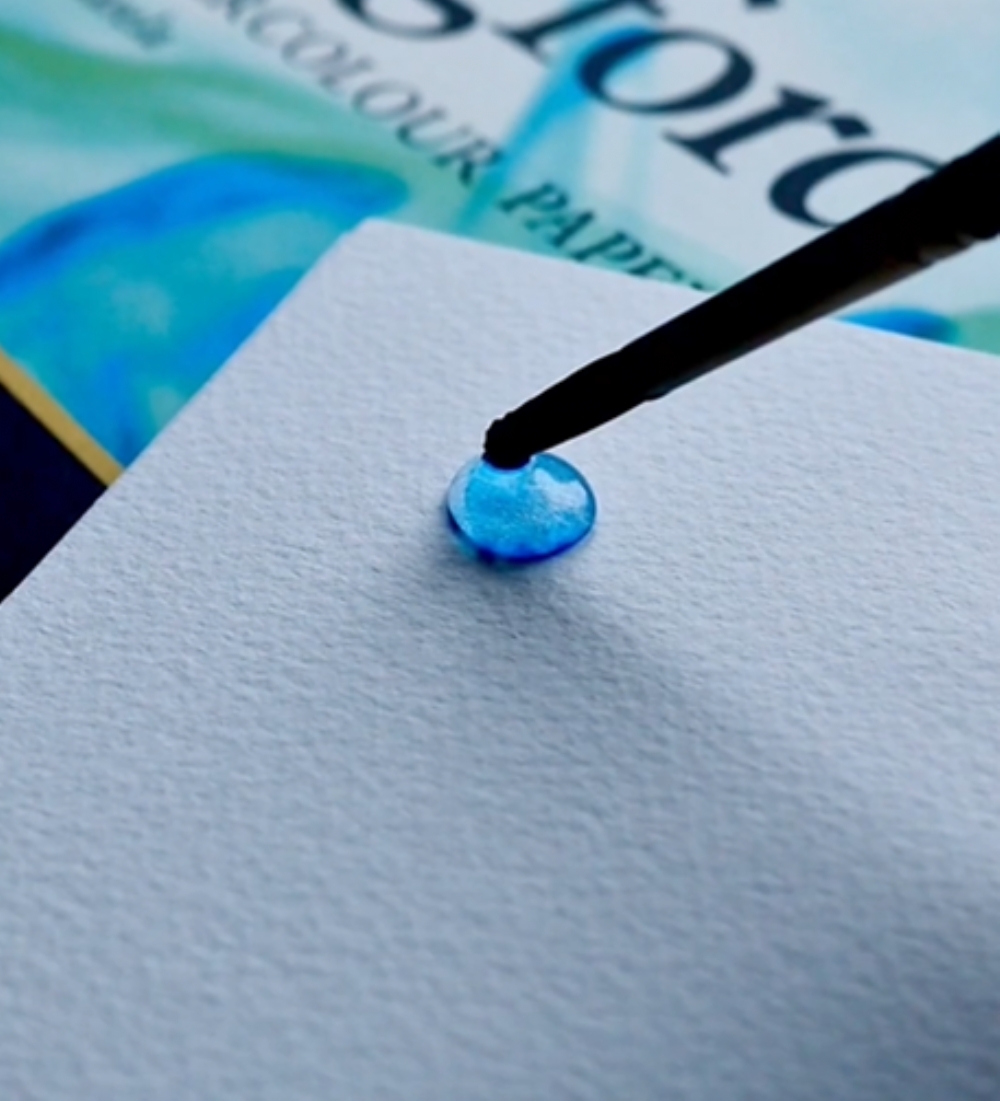
When a wash is applied to a well-made watercolour paper, the water should move calmly and evenly across the surface. The sheet should remain balanced, not forming isolated puddles, nor creating dry patches that interrupt the flow of pigment.
Instead, moisture should gradually disperse and evaporate at a similar pace across the whole sheet. As it does, pigments settle naturally, creating smooth transitions, soft edges, and harmonious blends. This behaviour is not accidental. It is the result of careful papermaking, where fibres are evenly distributed and the paper is sized to control how water is absorbed. The outcome is a sheet that supports the artist rather than working against them.
When paper dries unevenly
The difference becomes immediately apparent when a paper does not dry evenly. Some areas may remain saturated, holding pools of water that attract and concentrate pigment. Elsewhere, the surface may dry too quickly, fixing colour in place before it can be softened or blended. The result is often a patchwork of effects: blooms, hard edges, streaks, and unintended marks.
While watercolour embraces a degree of unpredictability, these effects are rarely desirable when they occur unintentionally. They can interrupt the rhythm of painting and make it difficult to achieve smooth washes or controlled tonal transitions.
For artists working on skies, backgrounds, or delicate gradations, uneven drying can be particularly disruptive. What should feel fluid and intuitive instead becomes something to manage and correct.
The importance of balance
At its best, watercolour paper achieves a delicate balance. It should not absorb water too quickly, nor should it hold it excessively on the surface. Instead, it allows the artist a moment, a window of opportunity, before gradually drawing moisture into the sheet and releasing it evenly.
This balance gives watercolour its characteristic fluidity while maintaining a sense of control. It allows colours to move and interact, but within a framework that the artist can understand and anticipate.
It is here that the true quality of a paper reveals itself.
Understanding ‘Open Time’
Closely linked to even drying is the idea of open time, the period during which the paper remains damp and workable after paint has been applied.
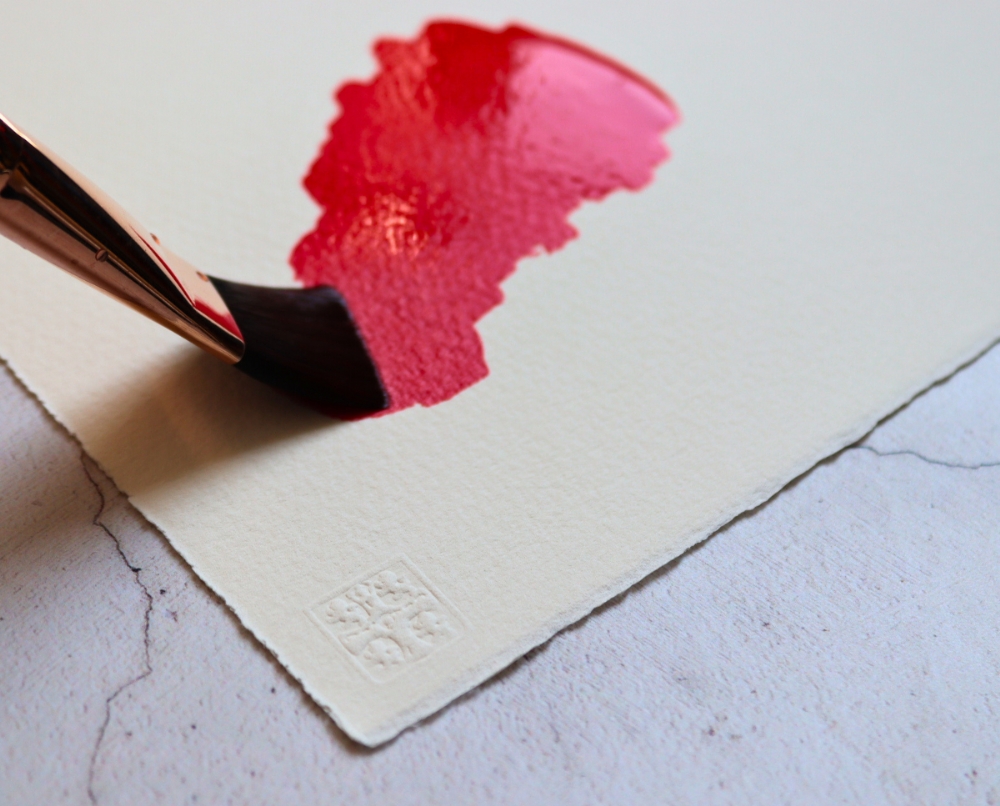
This is the stage where watercolour feels most alive. Edges can be softened, colours blended, and shapes adjusted. Pigment can be lifted or redirected. The painting is still in motion, and the artist is actively shaping its outcome.
A longer open time gives more freedom within this stage. It allows for slower, more considered work, particularly in techniques such as wet-in-wet painting, blending, and subtle tonal transitions.
If the open time is too short, the paper begins to dry before the artist is ready. Washes can lock into place prematurely, limiting the ability to refine or adjust. The painting process becomes rushed, and the sense of control diminishes.
High-quality watercolour papers are designed to offer a generous open time while still maintaining even drying. This combination is what allows artists to work with both spontaneity and precision.
The role of the paper’s structure
The ability of a sheet to dry evenly is rooted in its internal structure.
When fibres are well distributed throughout the paper, water can travel freely and consistently across the surface. This supports balanced absorbency and prevents the formation of isolated wet or dry areas.
Sizing plays a crucial role. It controls how quickly water is absorbed, ensuring that it remains on the surface long enough to be worked before gradually moving into the sheet. When sizing is well balanced, it contributes to both open time and even drying.
Together, these elements create a sheet that feels stable, responsive, and reliable under the brush.
A consistent experience for the artist
For many artists, consistency is a very important quality.
It is not enough for a paper to perform well once. It must behave in a familiar way each time it is used. Even drying and dependable open time allow artists to build trust in their materials, developing techniques that rely on predictable results.
This consistency is especially important when working on a series of paintings or when refining a particular style. Knowing how the paper will respond allows the artist to focus fully on the creative process.
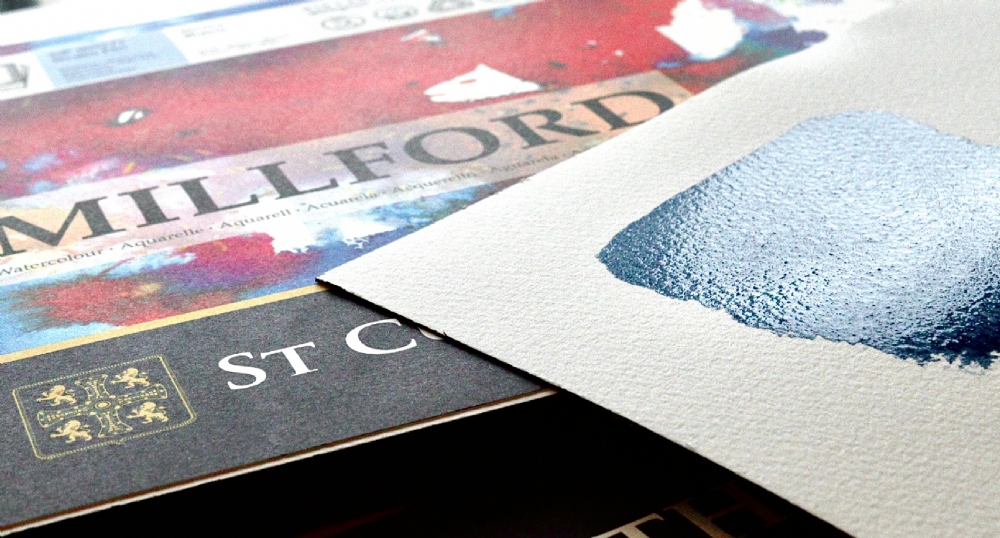
All St Cuthberts Mill’s papers are known to dry evenly across the sheet and are made consistently batch to batch, but their working time characteristics and absorbency are different:
- Saunders Waterford®: Extra-long ‘Open Time’ of around 40 minutes, with the sheet remaining in the most workable damp state for around 25 minutes.
- Bockingford®: An average length of ‘Open Time’ of approx 22 minutes.
- Millford: Extra-long ‘Open Time’ roughly 40 minutes. The paper stays in the wetter state for longer.
A foundation for successful watercolour
Watercolour is often seen as unpredictable, but much of that unpredictability comes from the interaction between water and paper. When the paper behaves well, the medium becomes far more manageable.
The paper should support the artist at every stage, from the first wash to the final detail. In this way, paper becomes more than a passive surface. It becomes an active partner in the creative process.